
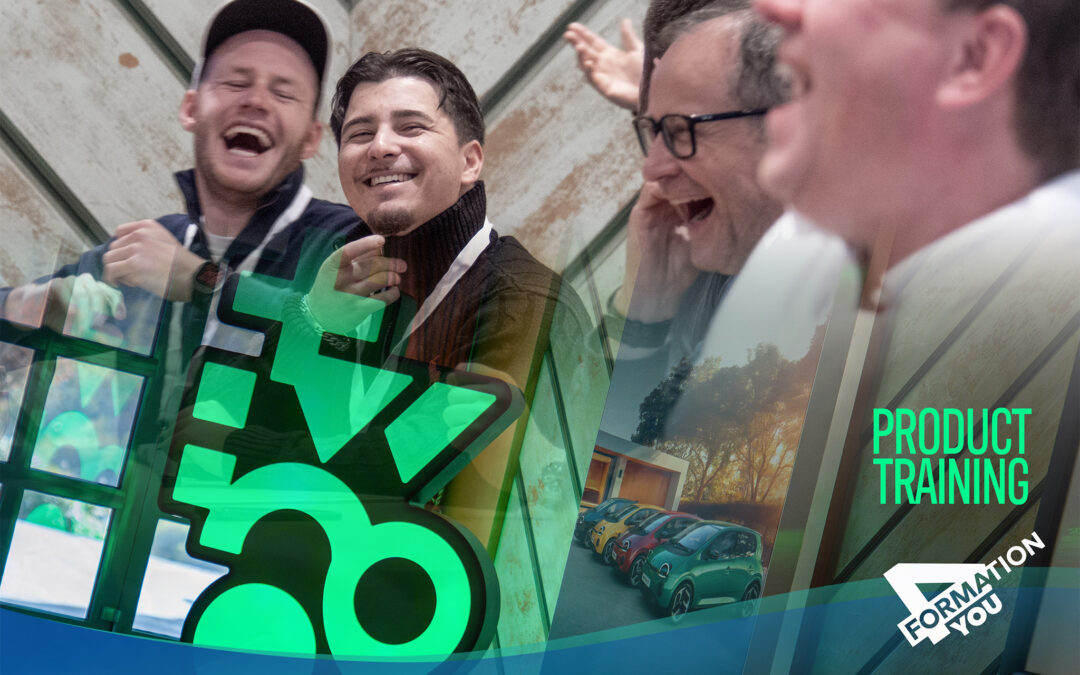
When Product Knowledge Becomes Genuine Confidence in Sales Conversations
How do you communicate complex e-mobility topics in a way that’s practical, engaging, and efficient? The product training for the new Renault Twingo in Austria showed what modern sales training can look like: compact, interactive, and firmly grounded in the realities of everyday selling.
The original training concept was designed for three days. Given participants’ scheduling constraints, it was deliberately condensed into one and a half days — pedagogically focused, clearly prioritised, and consistently oriented towards real-world relevance.
This highlighted one of the core strengths of modern learning design: impact doesn’t come from time alone, but from the quality of learning activation. Content was crafted so that theory, application, reflection, and discussion were tightly interwoven. Through missions, challenges, and concrete real-life scenarios, participants experienced an intensive learning environment characterised by high attention, active involvement, and immediate transfer to everyday sales situations.
At the heart of the programme was a blend of E-Tech training and classic product knowledge. Topics such as range, charging management, objection handling, and sales argumentation weren’t covered in isolation — they were embedded directly into missions and challenges.
Experience It, Don’t Just Explain It
Participants worked hands-on with the vehicle and worked through a variety of tasks built around typical customer interactions. The goal wasn’t simply to recall technical facts accurately — it was to communicate them in a way that is clear, credible, and relevant to everyday life.
In the e-mobility space especially, it’s clear that today’s customers aren’t looking for raw facts — they want guidance, reassurance, and answers they can actually follow. That’s precisely where the training design made its mark.
A Genuine Dialogue
One of the standout elements of the training was the fireside-style conversations with Renault directors. These sessions created space for direct exchange, personal conversation, and networking across the dealer network.
This sense of closeness between manufacturer, dealer network, and participants was repeatedly highlighted in the feedback as especially valuable. Beyond the technical content, it also fostered a stronger sense of community and richer exchanges around shared experiences, challenges, and best practices from day-to-day sales.
High Engagement in a Compact Format
The fact that a concept originally planned over three days could be delivered so successfully in a shorter format was noted as a standout positive by many participants. The feedback also showed just how well the format was received:
Some participants even expressed a wish to return to two full days in future sessions — not because anything was missing, but because the training atmosphere, the exchange, and the hands-on work were experienced as especially motivating.
The feedback was clear:
- strong practical relevance of the content
- high engagement driven by missions and challenges
- greater confidence in e-mobility sales argumentation
- meaningful networking within the dealer network
- a tangible sense of closeness between Renault and its trade partners
Takeaway: Product Training Needs to Be Experiential
Especially when it comes to new technologies, simply transmitting knowledge is no longer enough. Successful product training creates spaces where content isn’t just understood — it’s experienced.
The Twingo training in Austria showed how even compact formats can deliver strong impact when pedagogy, practical relevance, and interactivity are brought together with purpose.
Because in the end, what matters isn’t only what salespeople know — it’s how confidently, credibly, and authentically they can share that knowledge in a customer conversation.
If you’d like us to join you as a sparring partner for a product launch or the development of modern sales training programmes, we’d love to hear from you.