
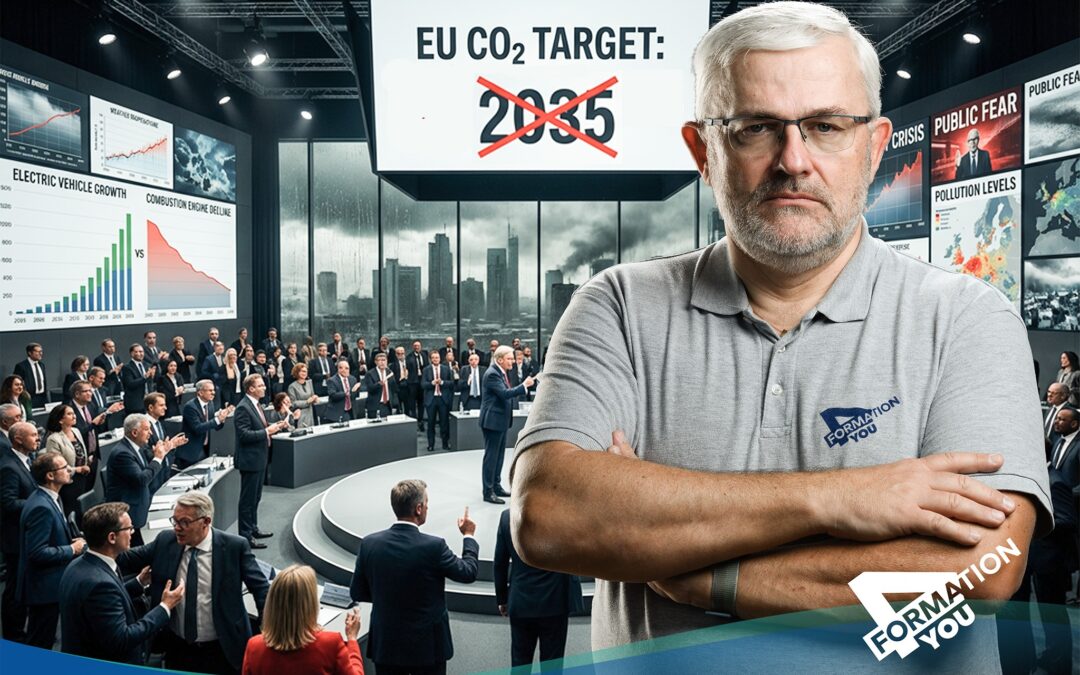
Why softening the phase-out of combustion engines is a strategic mistake
As someone who has followed, supported and advocated the development of electric mobility for decades, I observe Europe’s current political decisions with growing concern – not for ideological reasons, but out of experience and deep commitment to the European automotive sector.
With the “Fit for 55” climate package, the European Union sent a clear and long overdue signal in 2023: from 2035, only zero-emission new vehicles should be registered. This decision was far more than a climate policy statement. It was an industrial policy compass. A binding framework providing planning security, directing investments and concentrating innovation capacity.
The fact that this regulation has now been softened under political pressure from individual Member States is, in my view, a strategic mistake. Not because transitional solutions are fundamentally wrong, but because Europe once again creates uncertainty. And uncertainty is the strongest adversary of any technological transformation.
What is especially troubling is that we know this pattern. Yet it seems difficult to learn from it consistently. In the 1980s, Japanese manufacturers such as Mazda, Honda, Toyota and Subaru were underestimated in Europe by many market participants – regarded as too small, too niche, insufficiently “European”. Only a few years later they had established themselves through quality, reliability and close customer alignment.
At the turn of the millennium, a similar trajectory unfolded with Hyundai and Kia from South Korea. Once again, the signs of change were interpreted hesitantly – with noticeable shifts in market share as a result.
Today we stand at a comparable moment. This time with regard to Chinese manufacturers. Again, historical industrial strength, world-class engineering and powerful brand traditions are encountering new competitors who operate with different development logics. The reality is plain: BYD is now a global frontrunner in purely electric vehicles. Despite high tariffs, more and more Asian brands are managing to succeed in the European market – not because of political frameworks, but due to tangible capabilities:
- extremely fast development and decision cycles
- consistent implementation of customer and product requirements in manufacturing
- manufacturing quality that would have surprised many observers only a few years ago
These companies look consistently forward. And that in itself is a valuable source of momentum – for Europe as well.
European manufacturers and retail partners possess tremendous know-how, strong brands and decades of innovation expertise. Precisely for that reason, new market entrants should not be perceived as a threat, but as a benchmark – a measuring stick helping to build on strengths and accelerate internal processes. Competition has always been one of Europe’s strongest drivers of innovation. Yet it only has impact where change remains possible – not where transitional compromises become an excuse to slow down.
This is where my criticism lies: weakening already agreed regulatory guardrails sends the wrong signal. It slows investment, reduces innovation pressure and benefits actors who already decide and act faster. Anyone serious about transformation must provide reliability – for industry, research and society.
Electric mobility is no longer a subject of the future. It belongs to the present. The decisive question therefore is not whether Europe follows this path, but whether it shapes it actively… or allows others to shape it.
I look forward to an open, factual and even controversial exchange on this topic. We need this discussion now more urgently than ever.